Concert
July 4, 2026
Salle Claude-Champagne, Faculté de musique, Université de Montréal
- Mael Oudin — Essai de coexistence sonore (Karlax & double bass) -- performed by Benjamin Lavastre (Karlax) & Mael Oudin (double bass)
- Arja Kastinen — On the shoulders of the Great Bear (Kantele)
- Keon Ju Maverick Lee — Resonance and Depth (acousmatic)
- Gaël Moriceau — Harmonic Turbulences (T-Stick)
Intermission
- Tarcísio Braga — Tambor (snare drum et electronics)
- Matt Schumaker — Satellites (piano & electronics) -- performed by Hubert Ho
- Robert Normandeau — StrinGDberg (acousmatic)
Free entrance. This concert is open to all.
Program notes and biographies
Mael Oudin - Essai de coexistence sonore (Karlax, double bass and prerecorded electroacoustic guitar), – performed by Benjamin Lavastre, karlax & Mael Oudin, double bass
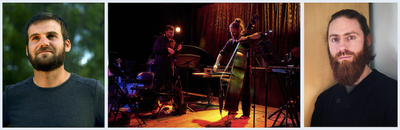
Essai de coexistence sonore was commissioned by the Collectif Radiance in the spring of 2026. His musical project is closely tied to his unconventional background, blending double bass, Karlax, and recorded electroacoustic guitar (performed by Andrea Gozzi). The Karlax is a digital musical instrument (DMI) that resembles a clarinet. It is equipped with several sensors: continuous keys, pistons, an axis, and an inertial measurement unit. Connected to a computer that hosts sound synthesis and mapping strategies, it enables performers to shape the sound through both subtle and more pronounced gestures. In the piece, Karlax also processes the sound of the double bass through a microphone mounted on the instrument's body. On the other hand, the prerecorded guitar samples are performed by Andrea Gozzi. The guitar is laid flat on a table and played using various exciters (pick, double bass bow, Ebow), with the sound processed through effects (Guitar DSP + various guitar pedals). The piece explores the possibility of a shared space between instruments of different natures through an investigation of the interactions between timbres produced by acoustic, electroacoustic, and digital instruments.
Mael Oudin is a doctoral student in music theory at McGill University and a composer of music for film and the performing arts. A graduate of the Paris Conservatory (CNSMDP) in composition and film music, he is also active as a double bassist in popular and improvised music. His doctoral dissertation focuses on the work of Michel Legrand.
Benjamin Lavastre is a composer, performer, and researcher specializing in digital instrument practices. He recently completed a PhD in composition at McGill University, focusing on his piece *Instrumental Interaction V* for 3 Karlax, ensemble, and electronics. His research explores the interactions between acoustic and digital instruments. He is also a guitarist active in the fields of jazz, improvised music, and contemporary music.
Arja Kastinen - Otavaisen olkapäillä (On the shoulders of the Great Bear), Kantele, 10'00
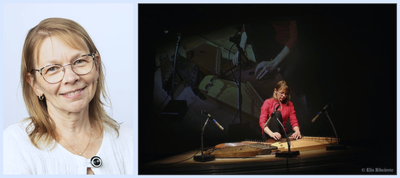
This improvisation is performed on two kanteles (traditional Finnish and Karelian plucked string instruments). The 12‑string kantele is a replica of a southern Karelian model from the late 19th century. It is hollowed out from above, has a separate top plate, and is strung with brass. The 15‑string kantele reflects the cultural shift in musical practice at the beginning of the 20th century: it is built from several pieces, with steel strings and metal tuning pegs. At the same time as the two instruments represent the distinct sound worlds of kanteles from different historical periods, they also complement one another when played together. Aesthetically, the music draws on the aural runosong culture, in which music was not a set of separate songs but a single entity—an endless stream without beginning or end. Kantele players’ “inner power” improvisations were spiritual journeys that could last for hours. This 15 min. improvisation is an experimental journey to the dim and distant past seeking to uphold tradition while creating new things.
Arja Kastinen (North Karelia, Finland, 1963) -- Having focused for over thirty years on Karelian kantele improvisation—its historical background, museum instruments, archival materials, scales, tuning systems, playing techniques, and musical aesthetics—Arja has become one of the leading artistic researchers in the field. Her latest five‑year project at the University of the Arts Helsinki ended in spring 2026 (https://www.temps.fi/en/research/kantele-of-the-runosong-culture-and-the-dialogue-of-creativity/). A follow‑up project has now begun, exploring the relationship between AI and the preservation of aural cultural heritage. Arja has released six solo albums and three archival albums rooted in the tradition of Karelian kantele improvisation.
Keon Ju Maverick Lee - Resonance and Depth (2025), Acousmatic, 10'00
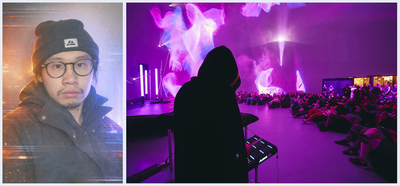
Resonance and Depth explores timbre and space through structured percussive improvisation between a human performer and co-creative musical agents. Live MIDI-compatible electronic percussion interacts with agents that fragment, recombine, and transform a personal corpus of metallic, skin-based, resonant, and frictional sounds, producing echoes, mosaics, synthetic resonances, and shifting textures. Spatial agents analyze the timbral qualities and behaviours of both the performer and the multi-agent accompaniment, dynamically diffusing and positioning sound across changing fields of depth, density, and movement. Reimagined with a more glitch-driven and maximalist aesthetic, the work unfolds through changes in timbral colour, morphology, energy, rhythmic density, and spatial motion, while exploring timbral identity and expressive music performance within the MIDI domain.
Keon Ju Maverick Lee (he/him/they) is a Korean-Canadian electroacoustic and acousmatic artist-researcher, electronic percussionist, and creator working across avant-garde electronic music and audiovisual art. His immersive works treat timbre, sound diffusion, and spatial motion as central compositional materials, with loudspeaker arrays and binaural headphones serving as complementary listening environments. As a research-creation PhD candidate at Simon Fraser University’s Metacreation Lab, they develop co-creative, artist-in-the-loop musical agents and interactive systems for percussion performance, while also conducting research on large-scale music datasets and computational approaches to music analysis. His performances, installations, and collaborative projects have been presented at the SAT in Montréal, MUTEK,WeSA, MusicAcoustica, Ars Electronica, SIGGRAPH, and the AI Song Contest as a Top 10 finalist in 2024. They have collaborated with researchers affiliated with C4DM, CIRMMT, and IRCAM, and have presented research through TISMIR, ISMIR, NIME, AIMC, and the NeurIPS Creative AI Track. His recent spatial works were selected for the petites formes 2026 Acousmatic Composition Competition and they remain active in Montréal’s avant-garde music and experimental arts community.
Gaël Moriceau — Harmonic Turbulences (T-stick)
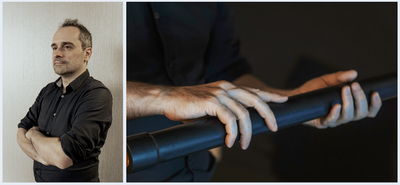
Harmonic Turbulences is an electroacoustic composition for the T-Stick, a gestural controller developed at McGill University’s Input Devices and Music Interaction Laboratory (IDMIL). Coupled with a Frequency Modulation (FM) synthesis engine designed in the SuperCollider environment, the T-Stick functions as a digital musical instrument (DMI), enabling the performer to shape sounds in real time. FM synthesis was chosen as a classic and efficient method for producing rich and complex timbres and textures. Performed on the T-Stick Sopranino, the predominant version currently available at IDMIL, Harmonic Turbulences unfolds as a continuously evolving synthetic soundscape, inspired by the contrasts between calm and stormy weather. The sonic textures undergo constant transformation, shifting from delicate nuances to powerful gusts, creating a dynamic and immersive auditory experience. This composition is part of an ongoing research project aimed at expanding the T-Stick’s repertoire and promoting its integration into contemporary music practice. By fostering engagement with DMIs among composers and performers, this work contributes to the continued development and longevity of these innovative instruments.
Gaël Moriceau is a master’s student in music composition and sound art at Université de Montréal (UdeM). A former mechanical engineer, he turned to music in 2019 and studied sound design and electroacoustic composition at University of Montreal, where he completed a bachelor’s degree in 2022. His work combines field recordings, synthesis, and spatialization to create immersive sonic environments. His current research focuses on developing playing techniques for Digital Musical Instruments (DMIs) such as the T-Stick and composing electroacoustic works for small DMI ensembles, aiming to expand their repertoire and promote sustainable creative practices for future performers and composers.
Tarcísio Braga — Tambor V, (2024, revised 2026) 10’00
for solo snare drum and quadraphonic fixed media
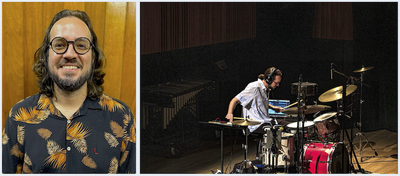
Tambor, meaning drum in Portuguese, originated from freely improvised warm-ups that I would create while working on specific written snare drum pieces. Many noted that these improvisations sounded like compositions, which inspired me to take them more seriously. The snare drum draws from Brazilian and West African hand-drumming practices, transforming rimshots, stick placement, and points of contact into a wide palette of timbral inflections. It also reflects Brazilian snare drumming traditions associated with maracatu, samba, and frevo, grounded in my field research. The performance places the live snare drum in dialogue with quadraphonic fixed media, shaped from processed materials drawn from my personal archive of Brazilian Amazon field recordings collected over eleven years in Manaus. Tambor explores how the environmental and acoustic properties of specific places can be integrated into an immersive artistic practice that brings together field recording, improvisation, composition, performance, and audience reception. Improvisation gives Tambor its open and spontaneous quality, allowing each performance to unfold in response to the space, the sound, and the moment. Tambor V continues my artistic exploration of Brazilian percussion, field recording, spatial audio, and the blurred boundaries between acoustic performance and acousmatic sound.
snare drum, performed live: Tarcísio Braga
yapurutú, cotia, and mawaco: Ricardo Sá
field recordings, fixed media, and revised quadraphonic spatialization: Tarcísio Braga
Tarcísio Braga (b. 1981) is a Brazilian drummer, percussionist, improviser, and educator. Driven by cross-pollination between tradition, technology, and embodied performance, Braga explores the drum kit, the snare drum, and acoustic percussion as hybrid instruments. Live electronics extend this practice through real-time sound processing, live looping, and spatial listening. More recently, he has incorporated processed field recordings, particularly from the Brazilian Amazon, as immersive sonic environments in multichannel formats. Braga is Professor of Music and Director of Percussion Studies at Amazonas State University (UEA), and is currently a Doctor of Music candidate at McGill University.
Matt Schumaker — Satellites (piano & electronics), 12’00
Hubert Ho, piano
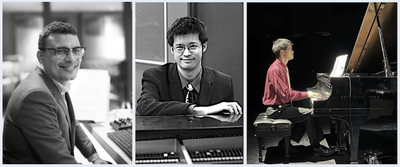
Satellites is a suite of three short pieces for piano and electronics that draws on the sound and science of flight and space. The music commemorates the work of Black American astronauts Robert Lawrence, Jr., Michael P. Anderson, and Ronald E. McNair, all of whom gave their lives to space research in the time preceding and around the era of the space shuttle. In Satellite 1, frequencies collected from words spoken by astronaut Michael P. Anderson during an interview from space are converted to pitches that provide the principal harmonies of the work. Satellite 2 draws on the distinctive parabolic curve of the space shuttle’s flight to space and uses it to structure the upwards trajectory of the musical phrases over the course of the piece. In Satellite 3, the sound of an F-104 Starfighter airplanes that Robert Lawrence, Jr. flew as a test pilot are analyzed for their component frequencies and then used to provide a harmonic span for the piece. These harmonies, derived from the sound of a single flyby, are stretched over the length of the piece. In essence, the space shuttle was an airplane, souped up with the power of massive liquid-fuel cryogenic rocket engines, undertaking deeply studied, delicately balanced, and precisely executed flights. Similarly, the electronics in this piece enhance the pianist’s expressive intensity, supporting the performer’s pursuit of a kind of musical escape velocity.
Matt Schumaker’s music explores relationships between composer, performers, and technology. His compositions emerge through dialogues with computer programs that extend and transform musical ideas. His ensemble works and works for soloists and technology have been presented at concerts and festivals internationally, including performances by members of Dog Trio at the klub katarakt Festival for Experimental Music in Hamburg, Germany; pianist Hyeyeon Jung at the International Computer Music Conference (Seoul, 2024); clarinetist Joshua Rubin at soundSCAPE in Blonay, Switzerland; and pianist Eric Huebner in a portrait concert at the Gassmann Electronic Music Series at UC Irvine. His writing on computer-assisted composition appears in The OM Composers’ Book 3 (IRCAM/Delatour). In November 2025, Schumaker was Festival Director of the Korean Experimental Music Festival, bringing together traditional Korean musical practices performed by members of Seoul’s National Gugak Center, Western classical instrumentation, and cutting-edge music technology through collaborations with UC Santa Cruz’s Music Department, UC Berkeley’s CNMAT, and Stanford’s CCRMA. The festival featured nineteen world premieres by Californian composers. Schumaker was a Martin Luther King, Jr. Visiting Scholar at MIT and is Assistant Professor of Music at UC Santa Cruz.
Hubert Ho’s music has been performed in Carnegie Hall under the Pro Musicis Foundation series and at the Kennedy Center for the Arts, D.C. A former United States Presidential Scholar in the Arts, he is a recipient of the Charles Ives Scholarship from the American Academy of Arts and Letters. His music has been performed at such festivals as June in Buffalo, the Wellesley Composers Conference, Cincinnati Conservatory’s Music 99 and Music 2001, by groups including the Oesterreiches ensemble fur Neue Musik, the New York New Music Ensemble, and the California EAR Unit, Das Chicas Trio, and the Bakersfield Symphony New Directions chamber concert series. He is an enthusiastic new music pianist as well, having performed with the groups Earplay (S.F.) and the Berkeley Contemporary Chamber Players (Berkeley). He also actively performed in the Czech Republic, at the Acanthes Festival in Metz, France, at the Darmstadt Ferienkurse fur Neue Musik, and recently at the 50th International Computer Music Conferenece. His scholarly interests include the relationship between music theory and psychoacoustics, and has delivered papers at various theory conferences on the music of Martinu and Varése. Dr. Ho received his Ph. D. from the University of California, Berkeley in Music and an A. B. from Harvard College in Music and Physics. He currently serves as Teaching Professor at Northeastern University.
Robert Normandeau — StrinGDberg (2001–03, revised 2025) 18’20
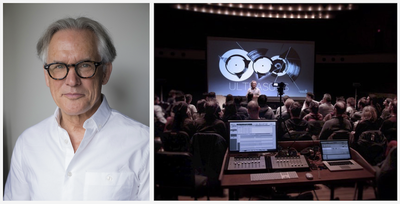
StrinG. The sole material of the work is the sound of two stringed instruments: one a bowed instrument, the hurdy-gurdy, and the other a stringed instrument played with a bow, the cello. Two instruments that represent two eras in the history of stringed instrument making: the first belonging to the era of rough, grating sounds, close to the common people; the other evoking refinement and the elevation of the soul, close to the aristocracy. In fact, the piece consists of two superimposed layers. The first one runs through the entire work, with all the sound material drawn from a single recording of the hurdy-gurdy lasting about a minute. Stretched, filtered, and layered, this material — redistributed within a multiphonic space — is rediscovered, layer by layer, over the course of the piece. Superimposed on this framework is a second element, originating from the cello, of a more sporadic nature, which comments on the evolution of the first and complements it over time. It is a work that invites a deep listening to the sound material, penetrating into the very heart of the sound
Strindberg. Music composed using sound elements created for the stage music of August Strindberg’s Miss Julie, directed by Brigitte Haentjens at Espace GO in Montreal in May 2001.
StrinGDberg is the first work in the Timbre Spatialization cycle, which focuses on the composition and spatialization of timbre in immersive loudspeaker systems. This cycle is still ongoing and comprises a dozen works. It was commissioned by the GRM (Groupe de recherches musicales de Paris).
hurdy-gurdy: Silvy Grenier
cello: James Darling
Robert Normandeau (Québec, 1955) -- His work as a composer is mainly devoted to acousmatic music. More specifically, by the tones used and the aesthetic choices that tend to it, his approach is part of a "cinema for the ear" where "sense" contributes to the development of his works just as much as "sound". More recently he has composed a cycle of immersive multichannel music for the speaker dome. Space has become a major feature of his musical work. Along with concert music, he has composed, for a period of twenty years, incidental music, especially for dance and theatre. He also worked as artistic director for over twenty years, especially for the concert series Clair de terre from 1989 to 1993 at the Planétarium de Montréal, and Rien à voir and Akousma from 1997 to 2006. He was Professor in electroacoustic music composition at Université de Montréal between 1999 and 2023, after completing the first Doctorate in Electroacoustic Composition (1992). He leads the GRIS (Groupe de recherche en immersion spatiale: Space Immersion Research Group), which produces SpatGRIS, a sound spatialization software.